Morgan Di Santo Reveals the Seedy, Underground Circles Known Only to Indie Farmers
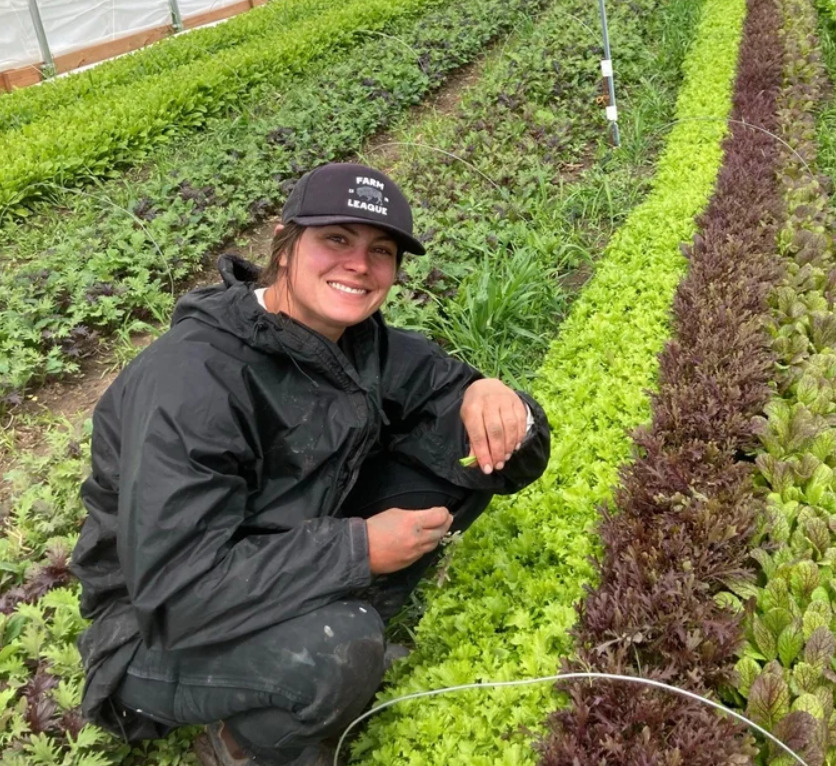
Morgan Di Santo is running in circles. Hardly surprising for someone who has chosen to be farmer. The cycles of the yearly seasons are an over-looping circle. The life cycle of a seed is also circular. But for Morgan, the sole owner of Long Table Farm, a small independent farm, the business of feeding her community can literally cause her to run around in circles.
Seedy Starts
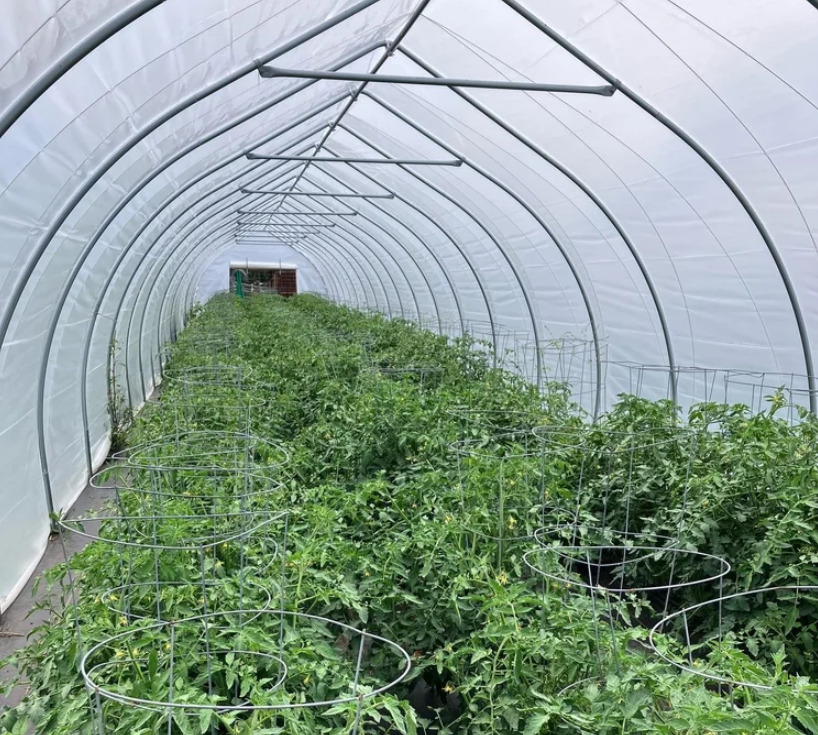
Especially this year. An unusually warm winter and summer-like temperatures in spring have disrupted the season’s typical cadence, forcing Morgan to stretch herself between her greenhouse—where seedlings begin—and the farm fields where crops mature.
She exhales, “There’s a lot of going back and forth!” Or, going round and round.
Abnormal weather aside, cyclical circles at LTF usually start with seeds—tiny capsules that, under steady care, explode into carrots, kale, tomatoes—a cornucopia of nourishment.
“I graduated college in 2016 and I didn’t really have a plan or anything,” Morgan recalls. Feeling somewhat lost, she visited family in Durango and, on a whim, enrolled in a farmer training program out at the Old Fort.
Witnessing the potent power of seeds transforming into food captivated her. It satisfied a hunger harbored deep in her soul.
Morgan says, “After literally farming for three months, I was like: I want do this. I want to start a farm—which is so incredibly silly, but here we are!”
No Days Off
What followed was less a calculated career move than a leap of instinct. In 2018, she and her best friend Kate Sopko launched LTF, piecing together leased plots in different locations, long commutes, and a willingness to learn by literally rolling up their sleeves and getting their hands dirty. By 2021, Morgan was running the operation on her own, supported by a small but dedicated part-time crew—and an ever-deepening sense of purpose.
For Morgan, farming isn’t just about growing plants; it’s about cultivating the soul. “I love being outside. And there’s such a special connection with your customers, being able to feed people in this very unique and intimate way; you’re literally growing the nutrition that they need and want.”
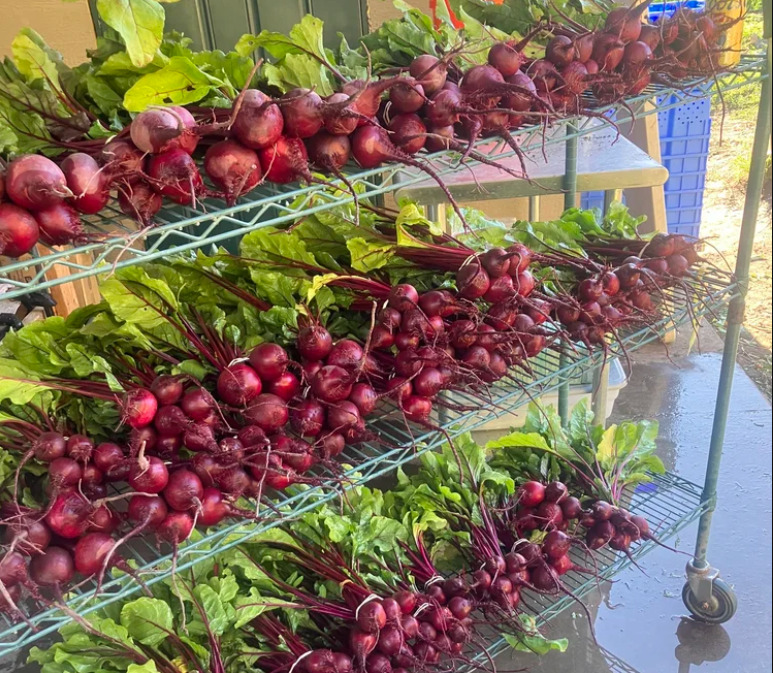
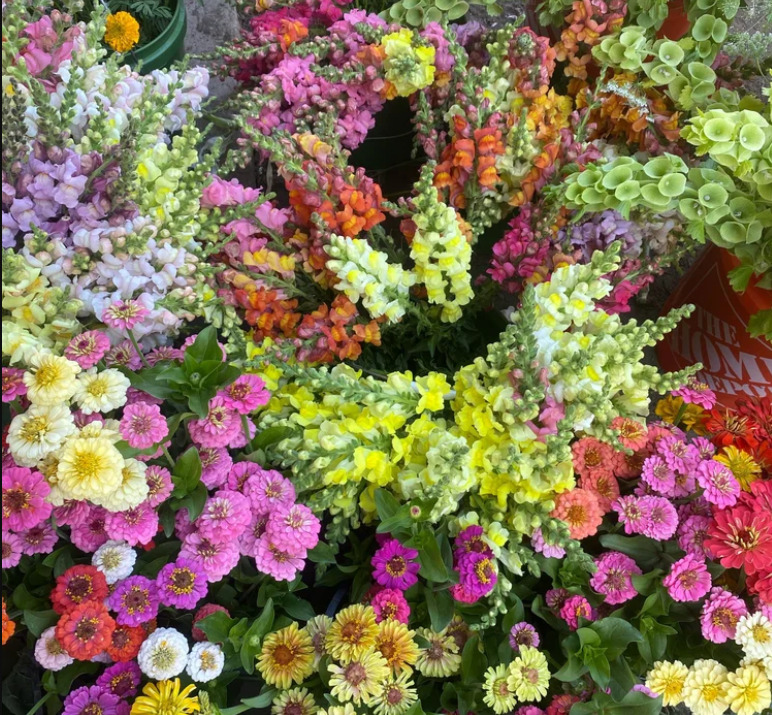
LTF’s mission—to provide the highest quality nutrient-dense produce—has grown into an unbroken promise fulfilled every weekend at the Farmers’ Market where shoppers select from 50-100 produce bunches representing 15 different crops, plus another 100 or so flower bouquets.
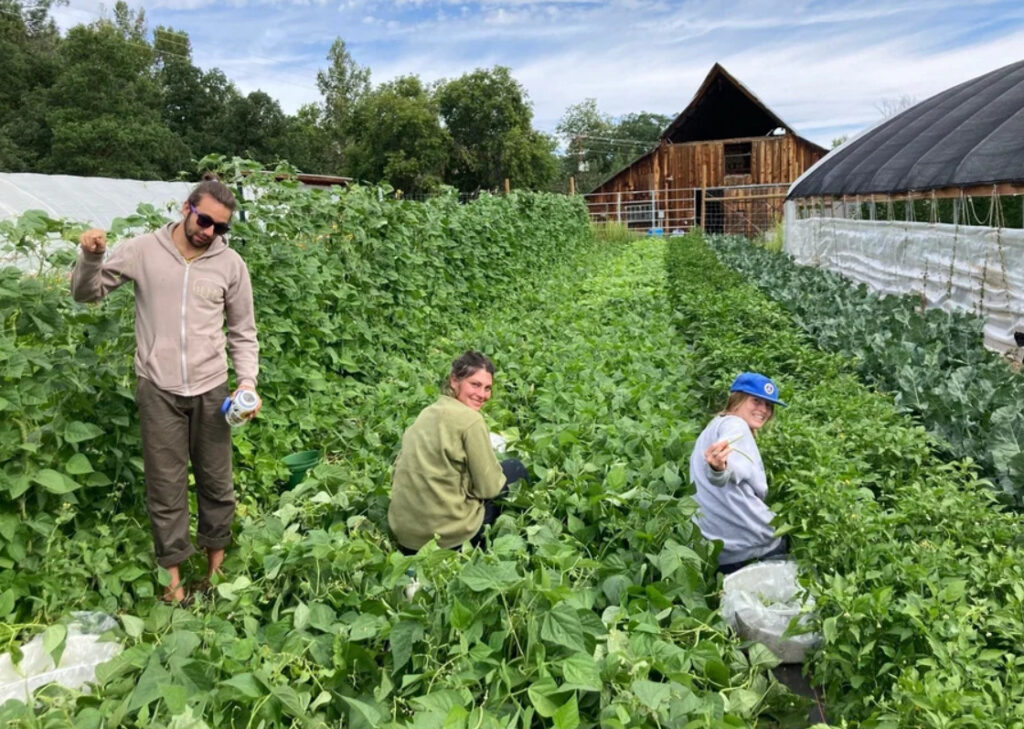
This level of productivity stems largely from Morgan’s resolute nature. “I’m that kind of person where I just do things at one thousand percent,” she notes.
Turns out, this trait is vital for successful farming.
“You have to show up every day,” Morgan explains. “As soon as you plant a seed, you’re attending to that plant for the entirety of its life. There’s no days off.”
Farming, especially at her scale—about an acre of cultivated land using primarily hand-powered equipment and elbow grease—is an exercise in devotion. The work begins with the soil. Morgan tills and amends her soil with pelleted chicken manure, and then uses a broad fork to aerate the ground, undoing the compaction created over winter. Beds are then raked smooth before she works in compost from Table to Farm.
Morgan relies on T2F’s quality soils because they form a dense nutrient base and source of moisture retention crucial to her growing cycles. “I’m always trying to add organic matter. It’s pretty hard to grow as much as I do every single year.” With multiple plantings per season, the soil’s nutrient reserves need to be regularly replenished.
“To keep up with [the dirt’s] nutrition demand, I have to be adding organic matter,” she explains. Compost becomes not just an input, but a keystone in the process—a way to return life to the soil that, in turn, sustains everything and everyone above it.
The Inner Circles
In this way, the relationship between Long Table Farm and Table to Farm Compost mirrors the relationship Morgan values most: reciprocal, grounded, and generative. Food scraps become compost; compost becomes soil; soil becomes food; food nourishes a community that, in turn, supports the farm.
Following soil amendment and seeding or transplanting, the farm cycle accelerates with watering, weeding, covering and uncovering delicate crops to shield them on cold nights. Farming, in other words, is a negotiation with cycles, extremes, and surprises.
Likewise, the structure of her business reflects a careful balancing act between ambition and sustainability. Instead of a traditional community-supported agriculture (CSA) program, Morgan operates a Farm Club model, offering prepaid cards that customers use like gift cards at the Farmers’ Market.
The system offers flexibility for both farmer and consumer while also accommodating the inherent unpredictability of agriculture. Rather than forcing the land to meet a rigid schedule, it allows the harvest to speak for itself.
That philosophy extends to access, too. By accepting SNAP benefits, Morgan ensures that her produce—grown with care and intention—is available to a broader cross-section of the community.
Through seasonal loops and infinite seed-to-food cycles, Morgan’s life as a farmer is revolutionary. It literally revolves around feeding others to feed her soul.
Visit Long Table Farm online to learn more!