
Ah, college—that magical time in young adulthood when we innovated groundbreaking recycling systems for food, clothing, and packaging. When we participated in ozone monitoring, building and maintaining trails, or regenerative farming that fed our fellow collegiates. Those were the days.
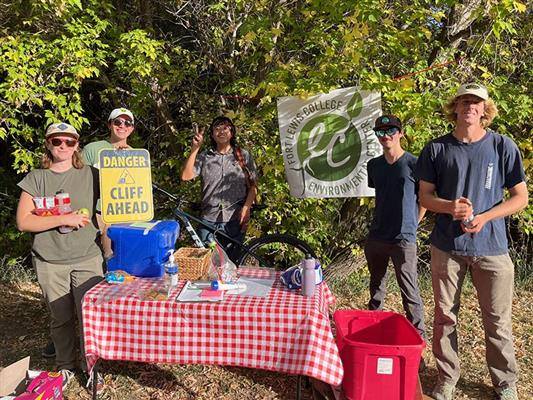 If this depiction does not mesh with your memories of college (frat parties, last-minute mid-term cramming, inexplicable fashion choices), do not adjust your television. These scenarios are extremely atypical and yet are reality for students who belong to the Environmental Center (EC) at Fort Lewis College.
Assistant Director of the EC Lizi Wirak finds the EC to be a wholly unique entity on any college campus. “I think across campuses, there are different clubs that have sustainability or similar initiatives, but not something like this with so much breadth and being able to have our hands in everything so directly,” she says.
The EC began as a student-led trash recycling movement in the 1990s. Since then, it has blossomed into a booming locus for bona fide service learning with real-world impact.
Wirak explains that the EC is not exactly a department and does not teach any classes. Students cannot select it as their major or minor, and yet they will learn how to make major changes in the broader world that mitigate environmental degradation.
A-crew-ing Knowledge
“The Environmental Center is a job for students and working there is much more hands-on than other campus jobs,” Wirak notes. Unlike more conventional work-study jobs where a student can often tackle homework while on the clock, EC students roll up their sleeves and get their hands dirty. Literally.
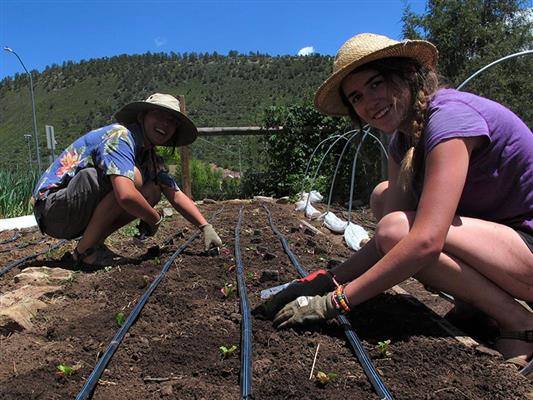 For example, the garden crew produces wholesome produce through regenerative farming tactics and participates in technical ozone monitoring in partnership with the Engineering Department. The campus garden plus a food forest orchard both supply the dining hall and the campus food pantry, ensuring all students, faculty, and staff can equitably access nutrition regardless of income.
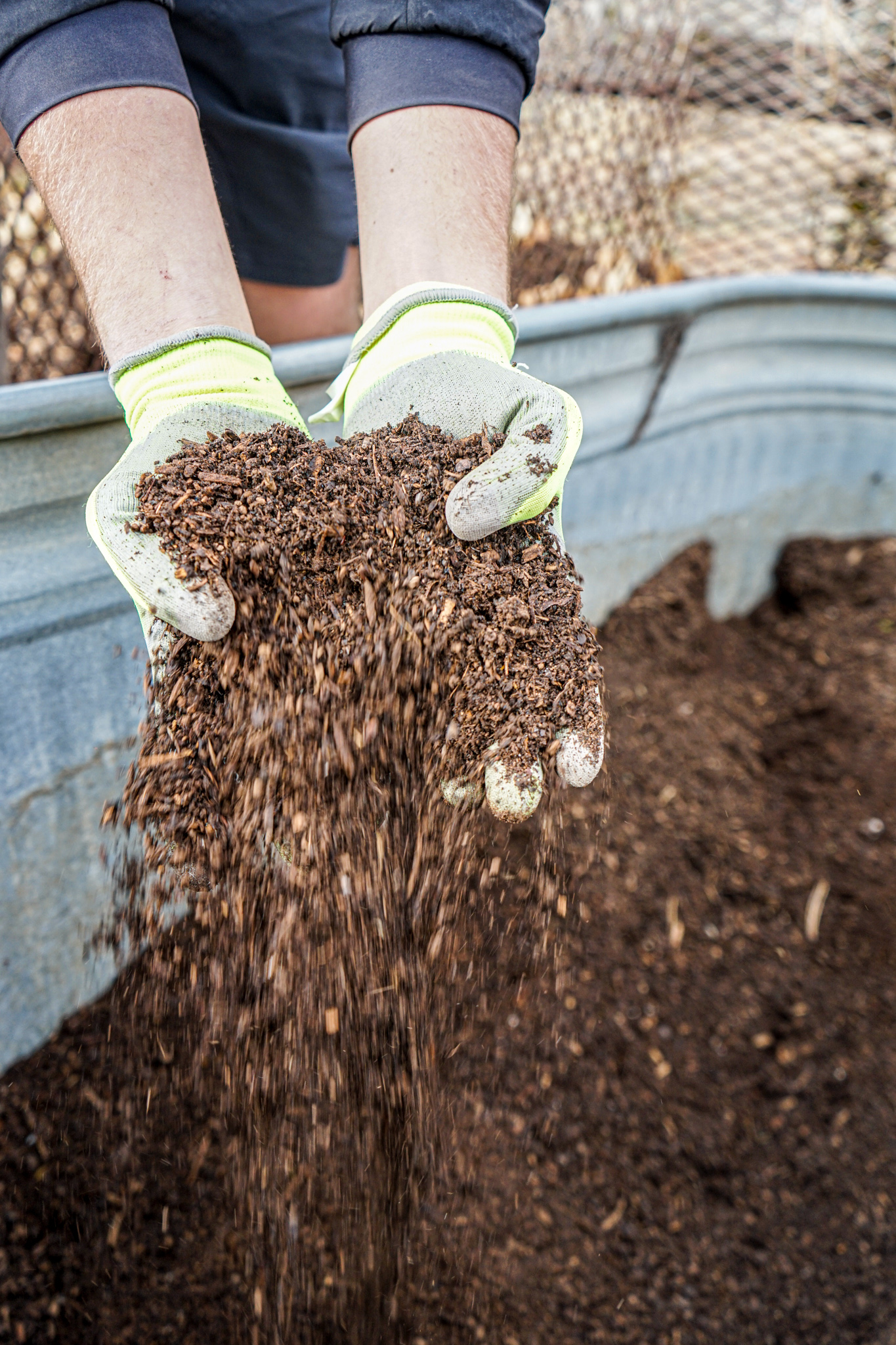
There’s a team to re-green the campus with native trees and plants. There’s a group that tends to the many hiking and biking trails. There’s a posse overseeing the e-bike loan program. Another squad runs the free store where gently used clothing and household items are redistributed rather than trashed in the landfill. And there’s a food waste diversion crew which ensures that all dining hall leftovers are converted to compost, which fertilizes the garden.
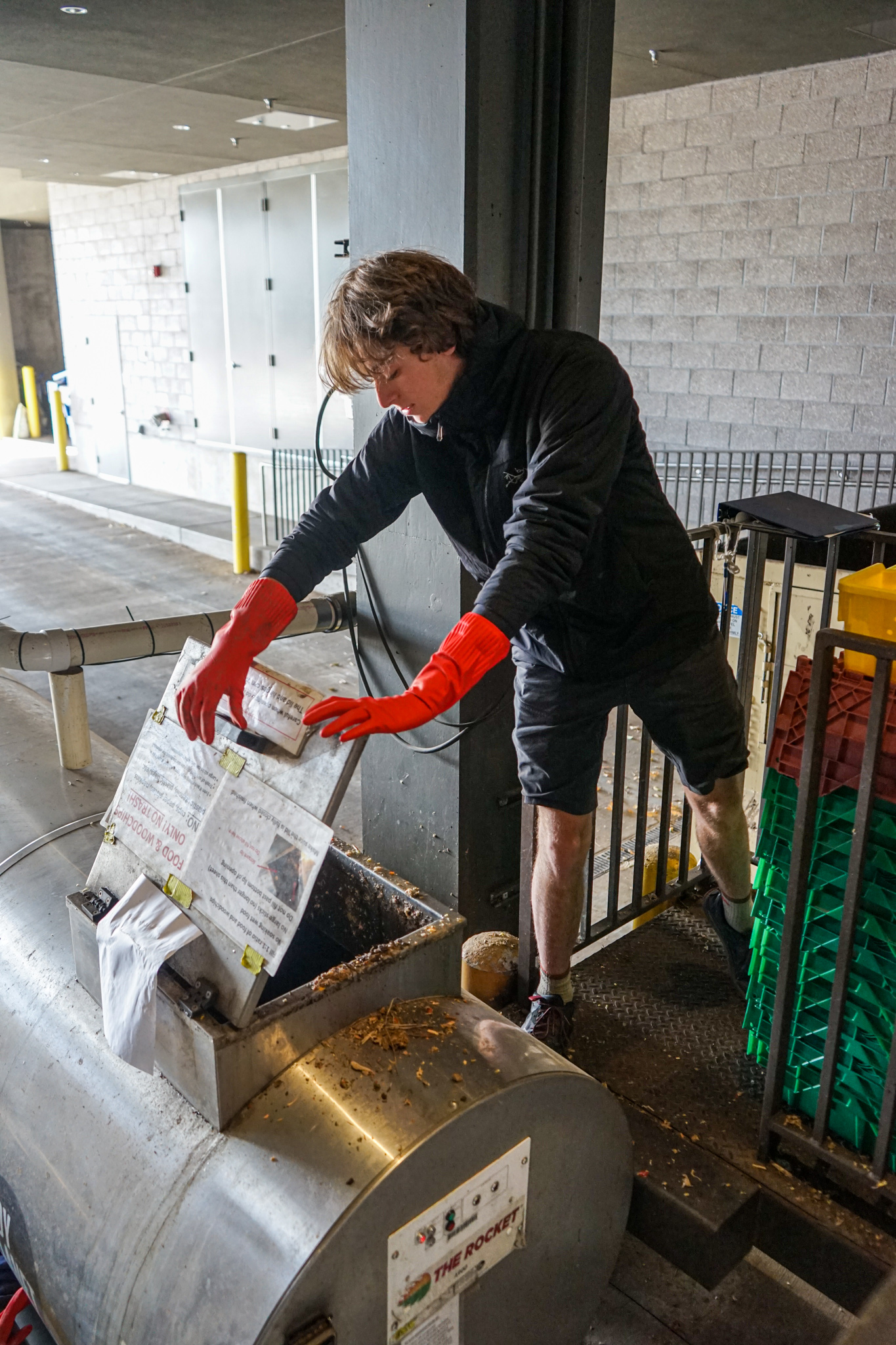
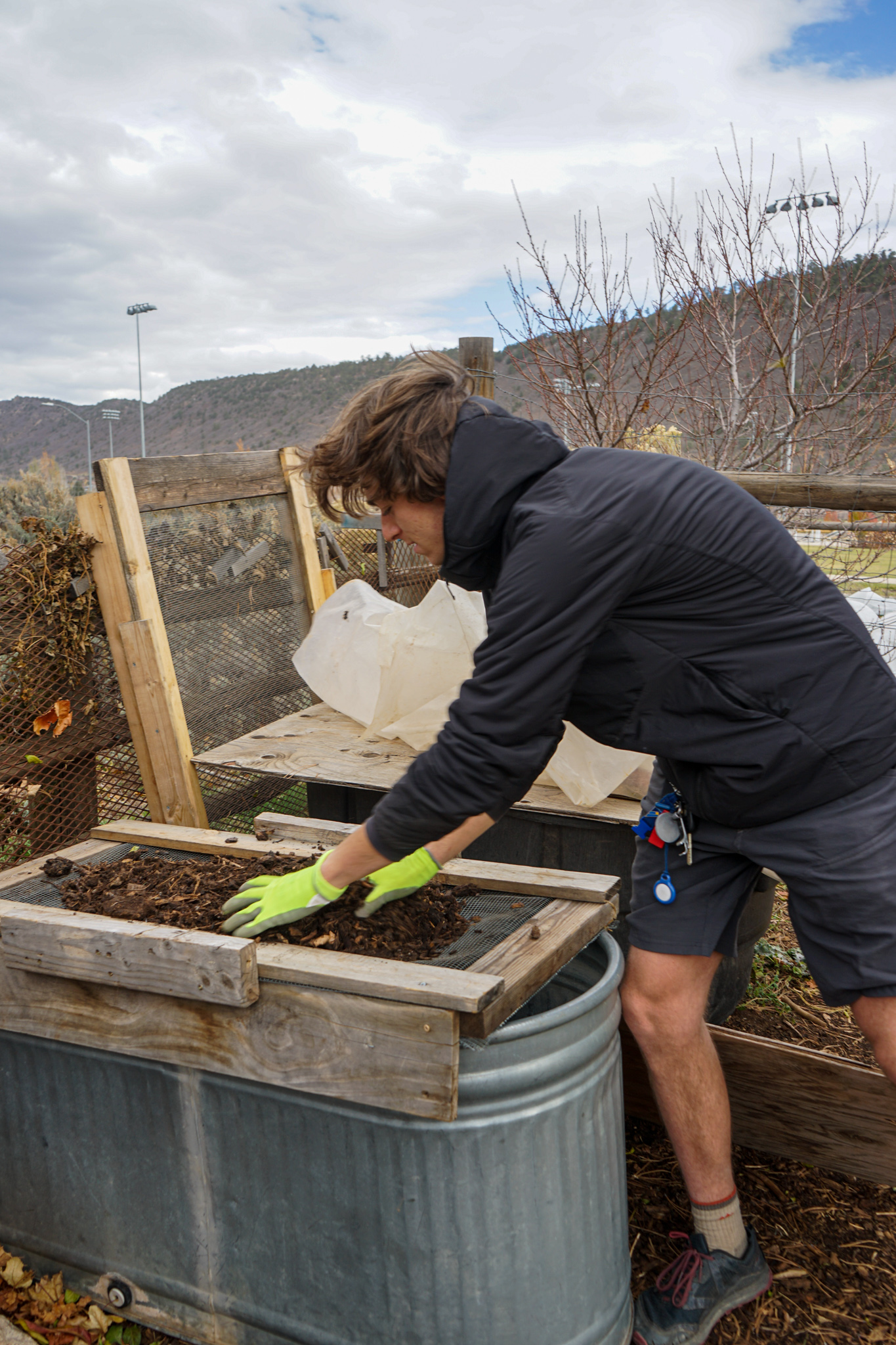
“Leftovers [are scraped off plates] into this giant blender, and then gets shot down this chute into what we call the extractor that pulls the right amount of water out of it before it goes into our Rocket Composter,” Wirak explains. “And then it sits in there for about three weeks. When it comes out, we mix it with wood chips [and about] three weeks later, it is more or less ready to use as compost. It’s incredible!”
The EC currently produces some 8,500 pounds of compost annually. But the daily leftovers from approximately 3,500 students is all the Rocket can handle. Table to Farm Compost (T2F) steps in to haul away additional scraps generated during meal preparation. To date, T2F has diverted from the college waste stream over 75,000 pounds of food waste that would have otherwise been crammed into an already jammed local landfill.
“Using Table to Farm is way easier and cost-effective,” Wirak says in contrast to acquiring an additional Rocket system.
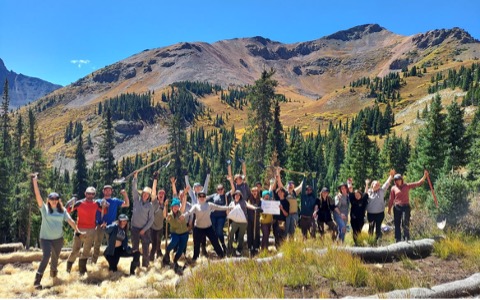
Remarkably, every program the EC oversees began as an idea proposed and fleshed out by a student. “But then when there’s recognition of a new need, we’ll form a new project, which I love about the EC,” Wirak says. “It’s very malleable to fit the needs of what students see as an issue.”
Spacing Out in Class
That the summit tackles topics which are pressing to students, as well as the wider community is evidence of the key factor that has mostly likely contributed to the EC’s mighty successes over the last three decades: belonging.
Contrary to expectation, the EC is not housed within any of the college’s science departments; nor does it nest under the purview of campus maintenance—despite most of its projects aligning closely with both of those broad categories.
 “We’re part of the Department of Belonging,” Wirak points out, adding that the broad objective of this organizational umbrella is to cultivate a sense of belonging on campus.
What on Earth does belonging have to do with sustainability activism and environmental advocacy? Turns out everything on Earth.
In the early months of 1990, at the same time FLC students were whipping up support for recycling, the Voyager 1 spacecraft had traveled some 4 billion miles from Earth since its launch in 1977. As it hurtled ever deeper into space, the little craft turned its camera backwards and snapped a now iconic photo of the pale blue dot that was Earth.
“Look again at that dot,” scientist Carl Sagan wrote. “On it everyone you love, everyone you know, everyone you ever heard of, every human being who ever was, lived out their lives […] on a mote of dust suspended in a sunbeam.”
Seeing the world, our world, through that lens makes clear that creating a greener planet is about more than making the globe cleaner. It’s about making it more hospitable, equitable, and livable for all because we don’t just exist here—we belong here.
“Once [students] have a sense of belonging, then it’s a space they want to contribute to…to make it sustainable…to make it clean,” Wirak affirms.
Ah college. These are the days!
Visit the FLC Environmental Center online to learn more! Subscribe to their newsletter and stay current on sustainability events and jobs in Durango. And follow the EC @environmentalcenter on social channels.